Search This Blog

Showing posts with label tips. Show all posts

How to know the Record/Field names without opening the Application Desginer

I've been using PS Utilities for a while and it is a great tool. But it doesn't support IE and Firefox. 

So how can we quickly get the Record and Field information on a page, without opening the Application Designer. I gave this info to a couple of functional people and they were all high about this simple technique. It helps the tech guys too at times, if someone ask about the similar information in between a meeting.

In Chrome/Firefox/IE 11, this can be achieved by placing the mouse pointed on the field and right clicking to select the Inspect Element option. This will open the developer window which shows you the HTML information of the page and highlights the field element.

The information about the Record and the Field is right there.

Trace the input element and see the name attribute to get the information in RECORD_FIELDNAME pattern.


A handy tip. 

Context Sensitive Help


If you are not able to view the document in the embed form above, download it by clicking on the PDF icon below

Embedding Pagelet to a Page

Never tried embedding the Pagelet to a page before. I have tried it on the home page or under a component. For those who have not tried this; below are the steps to do it.

Create a pagelet and publish it on the home page tab.


And make sure on the 6th step; that is on the publish pagelet step; to check the embedd pagelet option.


Now use the following code and place it under the event you like.

import PTPPB_PAGELET:*;
Local object &PWAPI, &Pagelet;
&PWAPI = create PTPPB_PAGELET:PageletWizard();
&Pagelet = &PWAPI.getPageletByID("ASDASD", False);
AMM_DERIVED.HTMLAREA = "
" | &Pagelet.Title |
"
" | &Pagelet.Execute() | "
";


AMM_DERIVED.HTMLAREA is the HTML area that you place on the page to display the embedded pagelet.

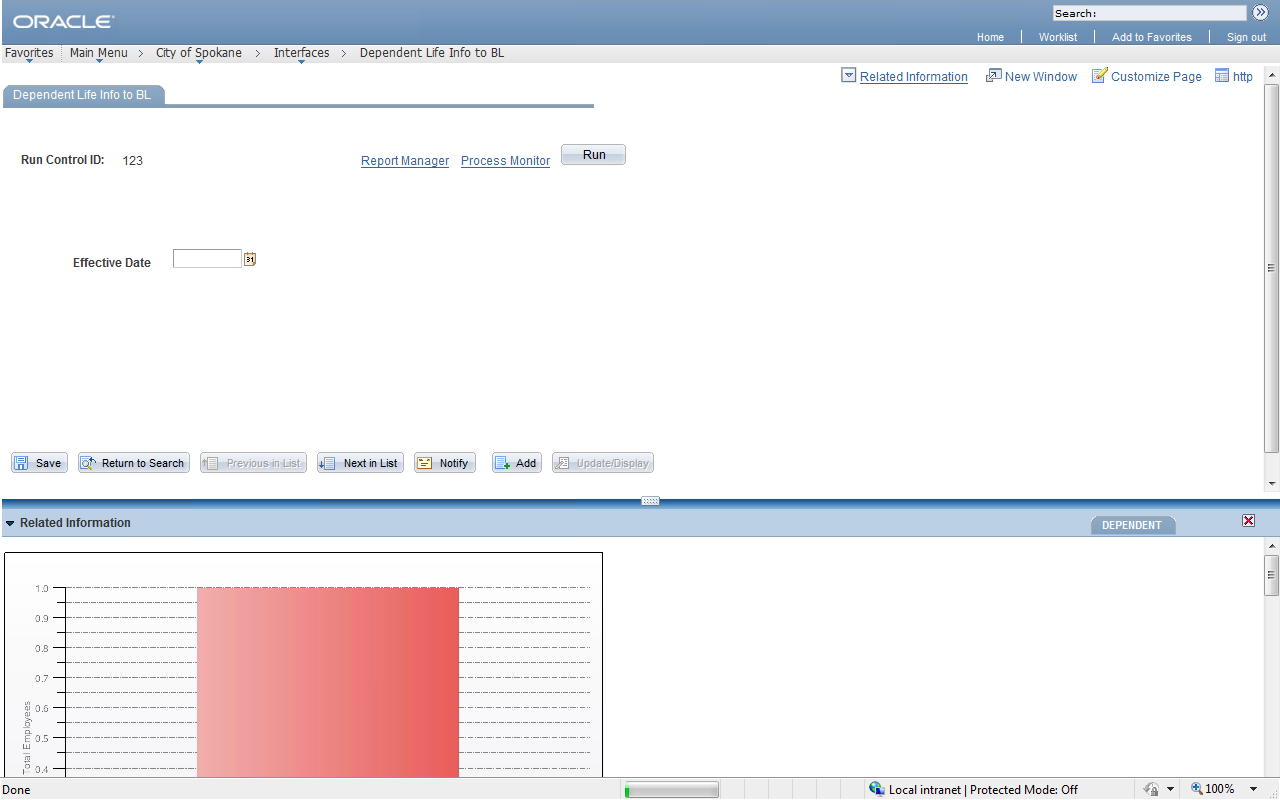
And the pagelet on the page will look like the one below.


Interesting right? Try it out!

Implementing Related Content

Just tried out implementing the same and it worked out well. Below are the steps to do the same.

Go to PeopleTools > Portal > Related Content Service > Define Related Content Service to create a new Related Content Service.

You can select the URL type you like. I selected the Pagelet type and provide the pagelet name in the URL information scroll. I wanted that Pagelet to appear as the realted content data.

Security option you can select either the public access or the available one. In case of Related Content Security check box, please refer to Peoplebook on how to do the same.


Now go to PeopleTools > Portal > Related Content Service > Manage Related Content Service.


Here you will assign the Related Content to your desired component/page. In the screen shot below, I mapped the related content to the page not to the component. To ensure security go to the Map Fields link and save.


Now you can navigate to the component where you mapped the Related Content. On landing to that component you can see a related content drop down on the upper right portion of the page. Click on the same to view the Related Content you mapped.


You can expand and collapse the Related Content section as you wish.

Pop up feature


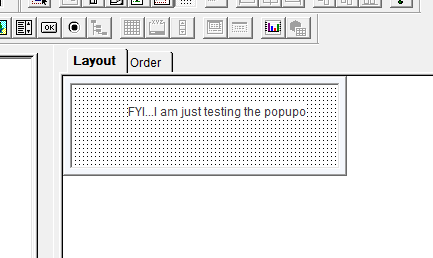
You might have seen the above pop up in the JOB data page. Wanted to look into this long time back; just today I thought of the same and looked into it.

It is fairly simple thing. Go to the employee field on the job_data1 page and navigate to the use tab in the definition property; you can see the popup page assigned.


I just created a pop up page and assigned to the emplid field to test it and it worked perfectly well.


As you see the feature is easy to implement. However its effectiveness depends on how we use it.

New PIA Installation

Requirement can happen for creating additional PIA's for the exisitng PS HOME. How to do it. Below are the steps to create the same.

1.Log on to the app server box
2.Shut down PIA
3.Go to C:\PSOFT\HRSA90\setup\mpinternet and run Setup.exe (If you are on windows) and follow the screenshots below:


Be sure to select "Existing Weblogic Domain" when you get to the "Select domain type" step.

Be sure to select "Install additional PeopleSoft site" when you get to that point.


The website name should be _pwd, for example:Please specify a name for the PeopleSoft web site:Website name:[ps] ps_pwd


Enter the same app server and port number as the primary website. To get this use PeopleSoft trick [CTRL+J]


For web profile name, enter the same web profile that is created for this PIA.
To create it go to PeopleTools > WebProfile > Copy webprofile. You can clone any web profile and provide that name here. In this case 'NEW' is the name of the new Web Profile created.


Once you reach the above step, click Install button to create the site.

You would not be having a seperate bat file for Start and Stop PIA.

Now to check the new PIA, Start the AppServer and modify the old PIA login link.

Old PIA will be looking like this: http://localhost/psp/ps/?cmd=login

New PIA: http://localhost/psp/ps_new/?cmd=login


To view the Login page (Signin.html) for the old and new PIA's; navigate to \webserv\peoplesoft\applications\peoplesoft\PORTAL\WEB-INF\psftdocs

Tino Simon

The Strings Table

I have seen this in a couple of SQR reports and this will be a good tip for the developers.

What is this Strings Table?

The PeopleTools Strings table (STRINGS_TBL) stores textual strings used for language sensitive labels and other text in PS/nVision and SQRs to avoid hard-coding labels into the report files themselves. The use of strings rather than hard-coded text in reports enables translators to translate the report layout in the database without editing the report’s code itself.This enables you to run a single copy of a report in multiple languages, while avoiding the duplication of code and report logic.Each row in the Strings table keys each string to a STRING_ID, which is associated with one of two different string types:

• The short (RFT Short) or long (RFT Long) field description of the field.

The STRING_ID must equal the field name.

• A free-form text string.

In either case, when a report requests a string in a particular language, the system returns the translated string if a translation is available. If no translation exists, the base language string is returned.

The Strings table is also keyed by a PROGRAM_ID field, which enables you to classify strings into groups that are used in similar reports. PROGRAM_ID can refer to a specific SQR or PS/nVision report name, or it can be a mnemonic for a group of common strings that are shared between reports

Click the picture to expand

Find Object Navigation

Might be a good handy tip. Those who knows this feature already please excuse. Searching the navigation is easy with this feature. try it out.


Click the picture to expand

PeopleSoft Ping

Just another good weekend. Expected some more work today, however it did not happen. Then I thought of just playing around the instance and saw this utility. Never seen or heard before. However it seemed interesting and gave a search in PeopleBooks. The details are given below. Hope this might be a new information for you too. For those who have worked with this utility; please feel free to comment.

The PeopleSoft Ping utility collects timestamps by sending a specific page to different tiers of the PeopleSoft system, starting at the browser, then going to the web server, the application server, the database and back. The timestamps that are collected are total time elapsed for the round trip, and arrival and departure time at each of the tiers.

To use the PeopleSoft Ping feature, select PeopleTools, Utilities, PeopleSoft Ping.

Nice weekend!

Testing Web Service with SendMaster utility

It was in version 9.1 in which first I tried creating a Web Service to GET and POST the data. This was fairly an easy job coz in 9.1 we have delivered SOAP tester. We can use it right after Generating the SOAP template, which is under the Service Utilities.


Click to expand the picture
However while trying to help a colleague I found that in 9.0 the Invoke Service Operation button is not available and we brought up the Send Master Utility.

Now I want to write about how to test a WSDL in Send Master. See the screenshot below.

Click to expand the picture

The Service URL: It is the gateway URL.
In the Header box if it is not populating by itself; you have to type it out. But be sure that the SOAP action is correct. How to get that?

For getting the SOAP action, hit the wsdl on the browser and search for the soapAction.

Dynamic Page Title

One of my colleagues had a small requirement to change the page title dynamically. The example is the RUNCTL_ASOFDATE page in HRMS.


Consuming Web Service

Thank you Rapheal for sharing the document. All this is an informative one.

Where is it?

This might be a duplicate information for many, but I believe some one is going to get benefitted from this once again.

The PeopleCode is stored in PSPCMPROG, which has all the PC objects details. If you want to quickly check the existance of your application engine program codes, the issue the SQL against this table.

SELECT * FROM PSPCMPROG WHERE OBJECTVALUE7 LIKE 'OnExecute%'

PSSQLTEXTDEFN: Contains all SQL objects in the database.
SELECT * FROM PSSQLTEXTDEFN WHERE SQLID like '%Step%'

Administering the application messages

Once the messages are in the DONE status, it is not possible to resent the messages. What If we need to re submit it?

One option we found is to trigger a SQL update against the table which stores the monitoring data - PSAPMSGPUBHDR

Update PSAPMSGPUBHDR set PUBSTATUS = 1, STATUSSTRING = 'NEW' where IBTRANSACTIONID = ’Transaction ID’ and STATUSSTRING = ‘DONE’

PUBSTATUS values:
0 - Error
1 - New
2 - Started
3 - Working
4 - Done
5 - Retry
6 - Timeout
7 - Edited
8 - Canceled

To monitor the messages, query the appropriate tables with the above status values.

Archiving IB messages and SO's

A beginner who just started working with the Integration Broker will be deleting the errored message one by one selecting the checkbox next to it.

Is there an easy way to do this operation with the delivered feature? Yes there is!

The PeopleSoft system provides a collection of Data Mover scripts that you can run to purge the runtime Service Operations Monitor tables within a database. These scripts reside in the PS_HOME\scripts directory on your file server.

AppMsgPurgeAll.dms
Deletes queue data from every archive or live runtime Service Operations Monitor table in the database, regardless of status. Typically, you run this script after an upgrade or while switching from a demonstration to a production environment.

AppMsgPurgeArchive.dms
Deletes queue data from every archive runtime Service Operations Monitor table in the database.

AppMsgPurgeLive.dms
Deletes queue data from every live runtime Service Operations Monitor table in the database.

Apart from this we have APPMSGARCH to archive service operation data is the batch approach. You can also archive individual service operations online using the Archive option on the Asynchronous Services-Monitor Overview page and the Synchronous Services page.

Navigation: PeopleTools > Integration Broker > Service Operation Monitor > Monitoring > Archive Monitor Data


Below are the list of tables that are affected by APPMSGARCH process. I got this information from Oracle Support, so much time can be saved from turning on a trace.


Administer PS Query

That was one of the requirements from the client, to monitor the frequent query usage by the faculty and the students to improve the query to provide better results. I was reminded about the Google Analytics strategy when I heard this requirement.

PeopleSoft provided this flexibility which aids the System administrators to:

Monitor query performance
Monitor query Usage
Monitor average runtime, number of times run, and the dates last run
Cancel queries that are currently running in Query Manager
Enable and disable queries and logging.

Navigations:

PeopleTools > Utilities > Administration > Query Administration
PeopleTools > Utilities > Administration > Query Administration > Executing
PeopleTools > Utilities > Administration > Query Administration > Settings

Cool feature

Quick look

One of my colleague was asking about Patched and Bundles yesterday. The below details gave him an understanding of those features. This will be helpful If you havn't come across any patching or bundle upgrade yet.

PeopleSoft Application and PeopleTools maintenance releases are intended to address defects,
performance enhancements, regulatory changes (such as tax updates), or security issues. In general, feature enhancements are part of new releases which require a product upgrade.


Application fixes and changes are delivered in a variety of means; these include individual postings (Patches), Bundles, Maintenance Packs and Service Packs.

Fixes

Fixes for specific issues with an application may be posted as a standalone fix intended to address that specific issue; these are generally referred to as Patches.

Patches

Patches almost always have pre-requisites that are included in the documentation for that Patch. Patches are created by development using the most recently released bundle, this means they may list that bundle as a prerequisite. There may be other pre-requisites that are also required, all pre-requisites are clearly documented in the notes for the Patch.

Bundles

Bundles are periodic accumulations of fixes resolved in that time period and applied to the application as a group. For most applications, the interval has been about every 6 weeks or 12 weeks for posting these Bundles. When Bundles are applied using Change Assistant, information about the Bundle is recorded in the Maintenance Log table for future reference. Bundles will typically require pre-requisites and occassionally post-requisites. These are documented in the notes for the Bundle. Information about the individual Report ID s associated with a Bundle is available in the supplemental information posted on Customer Connection related to that Bundle.

Maintenance Packs

Maintenance packs are less frequent updates that aggregate Bundles to minimize the number of Bundles that need to be applied. For most applications, maintenance packs are delivered once a quarter for the two most current releases.

Service Packs

Service Packs serve as a vehicle for an even larger aggregation of fixes than Maintenance Packs.
In all cases, the PeopleSoft tool Change Assistant is a valuable tool in identifying dependencies of Patches, Bundles, and Maintenance Packs.

Source: Oracle Support